Arizona vs. Michigan: Final Four Contest the De Facto National Championship Game?
/fit-in/64x64/1716811447/travis-pulver.jpg "Travis Pulver")
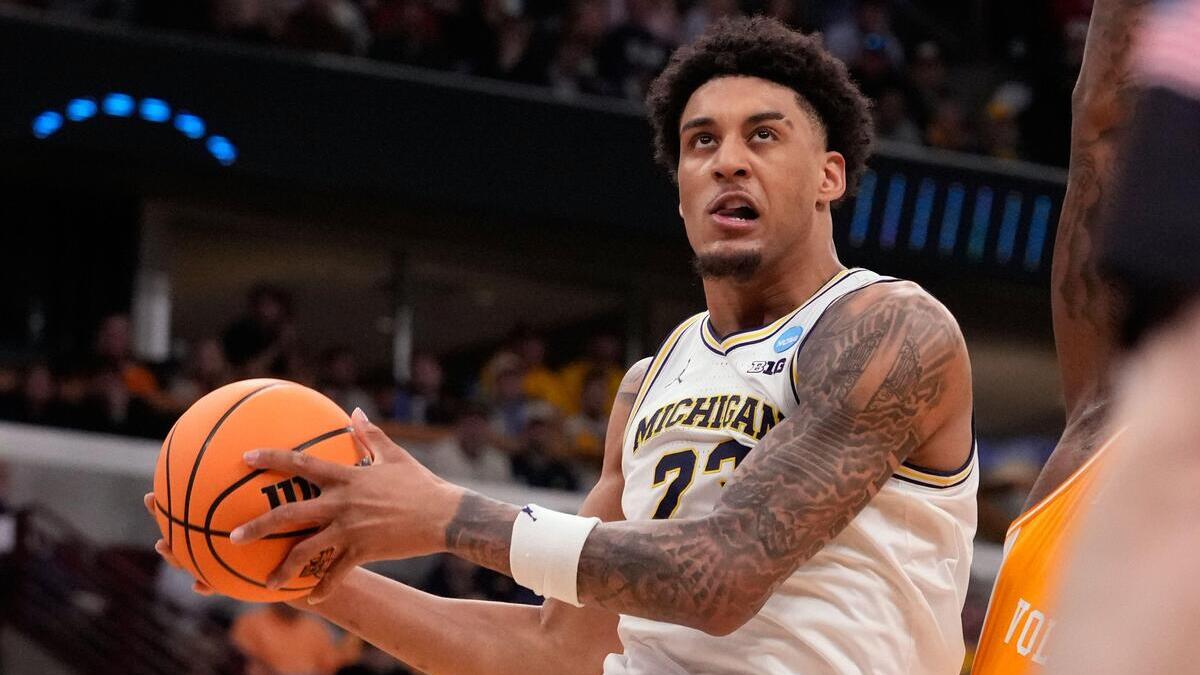
When the Arizona Wildcats face off against the Michigan Wolverines in the second game of Saturday’s Final Four at Lucas Oil Stadium, some say the national championship will have been decided.
The best four teams in the country are named the No. 1 seeds in their respective brackets, which each was. That doesn’t mean the teams seeded No. 2 or No. 3 are not good. It just means Michigan and Arizona (as No. 1 seeds) are recognized as being at least a little bit better.
So, in theory, if the No. 1 seeds are supposed to be the best teams in the country, one of them should win the national championship. Since 26 of 40 tournaments since 1985 have been won by a No. 1 seed, this theory holds.
Consequently, No. 1 Michigan vs. No. 1 Arizona becomes the de facto title game since they are the best teams remaining. Right? The answer to that is complicated.
Before we dive into more details, be sure to check up on the latest NCAA Tournament odds and favorites.
Recent NCAA Tournament History Says Yes, But…
The short answer to the question is wrong: any team can win on any given day, but that’s an empty platitude coaches of underdog teams tell players to get them to play harder.
What does the data that pertains to our specific scenario say?
Well, since 1985, there have been seven Tournaments where the Final Four games had one game that pitted No. 1 seeds against each other and the other with two teams of any seed but No. 1. It happened most recently in 2018 (Villanova (1) vs. Kansas (1) and Michigan (3) vs. Loyola Chicago (11)) Villanova went on to win the national championship over Michigan.
There were similar scenarios in 2002, 1996, and 1987. The No. 1 seed that won its Final Four game went on to win the national championship.
So, time to put some money down on either Michigan or Arizona to win it all, right? Not so fast, because there were also three occasions where a similar scenario unfolded in the Final Four, only for the winner of the non-No. 1 seed game to win the national championship.
To answer the de facto national championship game question, recent history says the answer is yes, but it is not a massive edge. But there is more to answering that question than history. It is worth pointing out that the state of the game has changed since the Tournament’s early days.
The Impact of the Transfer Portal and NIL Money
Thanks to NIL money and the transfer portal, the rich have gotten richer in college basketball while everyone else has gotten poorer.
Teams rebuild faster by mining the portal for more polished, experienced talent. Budding superstars are much more likely to transfer to a blue-blood program, often in title contention, and producing more NBA players.
If said superstar is torn between schools, there’s NIL money to influence the decision.
Arizona vs. Michigan: The De Facto National Championship Game?
The best answer to that question is actually - maybe.
Michigan and Arizona are No. 1 and 2 on the KenPom efficiency rankings. That could be why the Wolverines are small favorites in Saturday’s game (1.5 points or -120 via the moneyline). But at +100, the moneyline for Arizona certainly has value (odds via FanDuel Sportsbook)
However, Illinois comes in at No. 4 overall and No. 1 in offensive efficiency. Clearly, the Illini are a very good team. UConn’s efficiency rankings are good, but not as high (No. 9 overall, No. 27 offense, No. 9 defense).
But when UConn won in 2023, the Huskies were a No. 4 seed, and when they won in 2014, the Huskies were a No. 7 seed. This tells us that the Huskies should never be counted out, even if it looks like the other teams are so much better.
Back to the question at hand. No, the answer to the question is not maybe, it’s: possibly, but probably not.
Latest NCAAB Articles
/fit-in/400x235/1775459252/march-madness-final-for-the-history-books.jpg)
The 2026 March Madness Final Will be One for the History Books
5 months ago | Michael Savio/fit-in/400x235/1775203132/can-dan-hurley-win-third-championship-in-four-years.jpg)
Can Dan Hurley Win His Third Championship in a Span of Four Years?
6 months ago | Kody Malstrom/fit-in/400x235/1774731394/jon-scheyer-faces-biggest-test-of-coaching-career.jpg)
Jon Scheyer Faces Biggest Test of Coaching Career in Elite Eight
6 months ago | Bryan Zarpentine/fit-in/160x160/1716811447/travis-pulver.jpg "Travis Pulver")
Travis Pulver
Sports Betting Analyst
| Email: | travis.pulver@wsn.com |
|---|---|
| Nationality: | American |
| Education: | M.A. in Political Science |
| Favourite Sportsbook: | FanDuel Sportsbook |
| Favourite Casino: | FanDuel Casino |
| Experience: | 17 years |






/1773392173/dmca-image.png "DMCA")
/1670944202/21.png "21")
/1670944628/2022-igb-best-casino-affiliate-gig-media-e1651053747946.png "2022 igb best casino affiliate gig media e1651053747946")
/1670944701/gig-media-power-affiliates-rank-123x40-1.png "Gig media power affiliates rank 123x40 1")
/1670944773/800-gambler-black-144x40.jpg "800 gambler black 144x40")