Oklahoma Lawmakers Override Governor to Pass State Sweepstakes Ban
/fit-in/64x64/1738682906/kevin-lentz.jpg "Kevin Lentz")
Oklahoma Senate Bill 1589 had a long and winding road to passage in a state often portrayed to the outside world as having clear-eyed legislative gambling priorities. The bill, which will outlaw online casino games that use a dual-use currency system in the Sooner State, will take effect Nov. 1 and provide up to $100,000 in fines and up to Class C felony charges.
But it would be a mistake to see SB 1589 as just another bill about untaxed and unlicensed online gaming. This is a bill about tribal sovereignty, a governor who wants to rein in what he euphemistically calls “the tribal agenda,” and a supermajority of Republican state senators and representatives who ignored their own governor’s dislike of the bill and ultimately voted to override his veto.
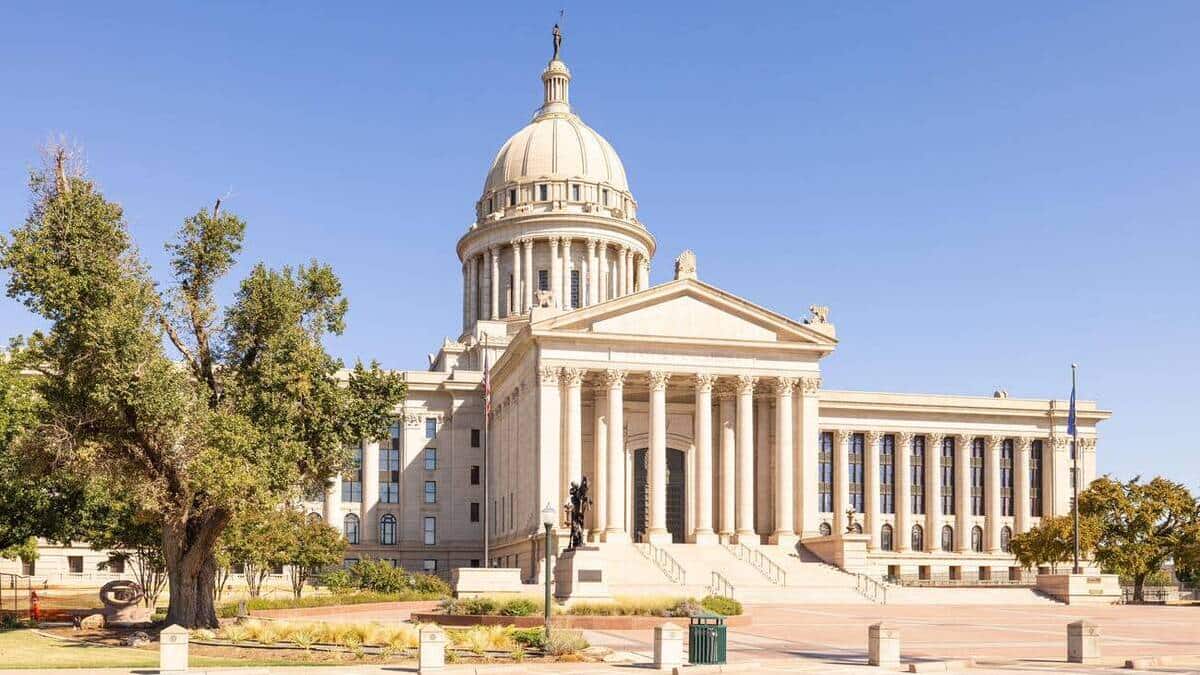
From Poverty to Skyscrapers
Let’s start with the tribes. In the 1830s, the Oklahoma Territory was seen as the end of the civilized world. The federal government was intent on clearing the tribes out of the way of settlement in the Southeastern U.S. The Cherokee, Seminole, Creek (Muscogee), Choctaw, and Chickasaw were all forcibly removed from their homelands and moved to reservations in Oklahoma.
The state nickname, Sooner, dates back to the resettlement of millions of acres promised in perpetuity to the tribes. That promise did not last long, with the U.S. government awarding land grants of former tribal land on a first-come, first-served basis to settlers in 1889 after the passage of the Indian Appropriations Act.
“Sooners” were settlers who illegally crossed into the territory early, hid on desirable land claims, and attempted to secure the best property before the official starting signal. It is an odd origin story for a state nickname: people celebrated for illegally jumping ahead to claim land that had already been taken from someone else.
Over the next century, both tribal land holdings and political power continued to erode, but tribal gaming would change that trajectory and the future of the Oklahoma Indian Nations for good.
The modern era began with State Question 712 in 2004, when nearly 60% of voters approved expanded tribal gaming compacts. This led to one of the largest tribal gaming expansions anywhere in the U.S.
Today, Oklahoma has more than 120 tribal gaming facilities operated by dozens of tribal nations, giving it more casinos than any other state in the country. They employ more than 50,000 workers, and by all accounts, another 140,000 jobs exist as a result of indirect economic activity from these operations. The total economic impact sits north of $20 billion.
The WinStar World Casino and Resort, just north of the Texas border, is the largest casino in the world. Its four hotel towers rise more than a dozen stories above the flat, empty plains, appearing like a city rising from nowhere. There are dozens more like it scattered around the state.
Some of the most economically powerful developments in today’s Oklahoma were built by the descendants of people the federal government once moved there to effectively disappear. One of those descendants is Gov. Kevin Stitt, who, despite allegations and criticism from some tribal commentators, remains an enrolled member of the Cherokee Nation.

The People’s Governor
Stitt came to office in 2018 as a political outsider and reform candidate. He had been CEO of Gateway Mortgage Group and won the election with 54% of the vote. He did not initially run as an anti-tribal culture warrior, but early in his tenure, that outsider mentality collided with the third rail of Oklahoma politics: tribal sovereignty and gaming compacts.
Early in 2019, just months into his term, Stitt argued that tribal gaming compacts were expiring and would need to be renegotiated. Tribal leaders insisted that the law was clear and the compacts would automatically renew, and Stitt dug in his heels.
He would ultimately lose not only in federal court but also before the Oklahoma Supreme Court. These early, stinging losses would come to define his eight years of increasingly combative relationships, not only with tribal nations but also with the lawmakers of his own party.
The fights did not end there. Over the following years, disputes between Stitt and the tribes expanded beyond gaming compacts and into broader arguments over sovereign jurisdiction, taxes, and political authority in a post-McGirt Oklahoma. What had started as a contract dispute hardened into open distrust.
But it was not only the tribes that Stitt's confrontational style riled up; there were increasing strains with lawmakers of his own party. By the end of the 2025 legislative session, lawmakers had seen enough, overriding roughly 90 of the governor’s vetoes during his two-term tenure, including a remarkable 47 in a single day.
It was into this highly charged atmosphere that SB 1589 was introduced. Like many recent anti-sweepstakes bills, it targets the dual-currency system, but it also outlaws anything redeemable for cash, prizes, gift cards, or anything of value under Oklahoma law.
Also in keeping with several new laws banning sweepstakes, especially AB 831 in California, it does not just target operators. It also penalizes payment processors, geolocation companies, affiliates, promoters, and even media partners with potential felonies and six-figure fines.
The governor went on record stating that he felt the law was overly broad, unnecessarily created a new felony classification, and extended criminal liability too far downstream, threatening to ensnare everyday mobile apps in unintended legal consequences.
But what was left unsaid was his displeasure with the way the law explicitly carved out tribal gaming activities, along with the fact that the bill was heavily backed by his old nemesis, the Oklahoma Indian Gaming Association, which saw social casinos as market competitors.
The Digital Reservation
The Muscogee Nation has already implemented, and other tribes are studying, real-money, online Class II gaming on tribal lands. Under the strict definitions of the original draft of SB 1589, this would have been outlawed. To protect the tribes, Oklahoma Rep. Scott Fetgatter and House Speaker Kyle Hilbert included an amendment to the bill which specifically states it does not apply to tribally regulated, on-reservation gaming.
For readers envisioning tribal online gaming as something confined to casino parking lots or isolated reservation land, the scale of the post-Supreme Court McGirt decision tells a very different story.
The Muscogee Reservation spans more than 3 million acres across portions of 11 counties and includes large sections of the Tulsa metropolitan area. Roughly 250,000 people within the Tulsa metro alone reside on land covered by the reservation.
Under this framework, tribal mobile gaming no longer looks like a rural niche product. It begins to resemble the foundation of a much larger digital gaming market that may eventually cover all of eastern Oklahoma as other tribes get on board.
Sine Die
In the end, SB 1589 was never really just about the best sweepstakes casinos. It was about who will control gaming, especially online gaming, in the state over the next several decades: the tribes or the state and just how much power will eventually rest with each entity.
While officially the bill targeted unlicensed casino operators attempting to hide behind dual-currency sweepstakes mechanics, unofficially it also protects a fledgling tribal online gaming experiment that some state officials would have liked to smother in its crib.
Despite the best efforts of the governor over his two terms, the tribal nations have become one of the most economically and politically powerful forces in the state.
And so, as a term-limited Stitt stared down the gavel ending the final legislative session of his administration, one that lawmakers chose to conclude two weeks early on May 14, he escaped with only nine vetoes during the session. One of them was SB 1589, a final reminder that in Oklahoma, gambling legislation is seldom just about the gambling.
Latest Betting Articles
/fit-in/400x235/1665758384/louisiana-senate-easily-passes-sports-betting-bill.jpg.jpeg)
Louisiana Tribe and Kalshi Announce New Prediction Platform
2 hours ago | Michael Savio/fit-in/400x235/1749455782/new-york-state-capitol-albany.jpg)
New York May Soon Mandate Monthly Sports Betting Statements
1 day ago | Michael Savio/fit-in/400x235/1730374518/democratic-committee-oppose-missouri-sports-betting-amendment.jpg)
Missouri AG Sends C&Ds to Sports Prediction Platforms
3 days ago | Michael Savio/fit-in/160x160/1738682906/kevin-lentz.jpg "Kevin Lentz")
Kevin Lentz
Casino Expert
| Email: | kevin.lentz@wsn.com |
|---|---|
| Nationality: | American |
| Education: | N/A |
| Favourite Sportsbook: | Caesars Sportsbook |
| Favourite Casino: | BetMGM Casino |
| Experience: | 30 years |






/1773392173/dmca-image.png "DMCA")
/1670944202/21.png "21")
/1670944628/2022-igb-best-casino-affiliate-gig-media-e1651053747946.png "2022 igb best casino affiliate gig media e1651053747946")
/1670944701/gig-media-power-affiliates-rank-123x40-1.png "Gig media power affiliates rank 123x40 1")
/1670944773/800-gambler-black-144x40.jpg "800 gambler black 144x40")